cancelli#
Roberta De Piccoli, Annamaria Federici, Daniela Bazzani, Damiano Meacci
cancelli# chiusi arrugginiti immaginari aperti presenti scardinati sospesi sognati utili rumorosi tanti uno vergini vissuti lontani vicini violati inspiegabili antichi rivelati assenti silenziosi cancelli# fuggire vivere partire morire socchiudere restare sbattere tornare lavorare nascere cancelli# casa campagna password convento chiavi barriera aeroporto metropolitana scale deposito archivio fabbrica scuola memoriale spiaggia fattoria teatro cancelli# passato presente futuro
(gates# closed rusty imaginary open present unhinged suspended dreamed useful noisy many one virgin lived distant near violated inexplicable ancient revealed absent silent gates# to flee to live to leave to die to half-close to stay to slam to return to work to be born gates# home countryside password convent keys barrier airport underground stairs storehouse archive factory school memorial beach farm theatre gates# past present future)
cancelli# – video from “Salto nel suono” Festival
First performance – “Salto nel suono” – 8 April 2015
cancelli# – sound excerpt from “Salto nel suono” Festival

The gate seems to find no place in the books on the history of symbols. If we look beyond its everyday nature, it appears to have acquired symbolic meanings only relatively recently, while remaining linked to the far older meaning of the door, and thus of the threshold. Its definition takes on particular importance in dream interpretation, where it is understood as the chance “to glimpse another world through its reeds and beyond its closure”. From this perspective it seemed to us related to the shape of the Jewish candelabrum and, further still, to identify its reed-arms with the strings of Orpheus’s lyre. In this perspective of continuous metamorphosis, the shaman of the soul in the Orphic doctrines becomes in turn an ‘instrument’ of female initiation, in a process in which art and love are part of a mystery rite of knowledge (his sound offers ever new perspectives depending on the instrument he holds in his hands and brings to life). Ligeia, Eurydice and Sappho are three female figures (three gates) he meets on his mythological journey; in this work they become the three ages of passage that, after menarche, lead a woman to self-awareness (adolescence, youth, maturity). To these four characters we added a magical and ambiguous Smith (Fabricius), a figure absent from the myth but known to the collective imagination as the legendary shaper of red-hot iron. In this story he is the one who invisibly allows the gate-woman to take on form/sound: a sort of Orpheus-lyre in disguise. In this essentially dramaturgical writing, the myth has absorbed suggestions and ideas from the Nordic legend of Wayland (Wëland), the fairy tale of the three swan sisters, the Jewish tale of the corpse bride, and from cultural and etymological notes on the cult of the dead and on the role of musicians among the Roma people and in ancient India.
In the multimedia score, built from text, music, images, voice and live electronics, the characters deal with the gates through functions expressed by words, images, sounds and written, predetermined and improvised musical elements. There are five of them, like the stages novices pass through as they gradually reach the door of knowledge. Orpheus is the gate in potential, the one who animates everyone, himself included, through the mystery path of the melodic parameter, in countermelody with the rhythmic parameter of the Smith, who supports and varies the path of initiation through a kind of basso continuo. Ligeia, the siren Orpheus meets during the expedition of the Argonauts, is a virgin gate: pure sound that seduces naively, unable to understand or fully face Orpheus’s unity of music and word. Eurydice, the bride lost in Hades, is here the one who chooses Hades: she is the silence that follows the confusion before a decision, the chosen closing of a gate. Finally Sappho, the inhabitant par excellence of the island of Lesbos, where Orpheus’s head and lyre come ashore after the punishment of the Furies, is a gate left ajar and ready to open, the ‘son/daughter’ of those before her, ready to take a new path: poetry.
The live performance amplifies the metamorphic, compositional and organisational perspectives of the sound/word/image relationships of the audiovisual work it grew out of (a pocket film commissioned for a multimedia exhibition in 2012), expanding and developing it on stage. Co-author and performer Damiano Meacci interacts with Annamaria Federici’s musical structures, Roberta De Piccoli’s voice and Daniela Bazzani’s images through various forms of live electronics.
Screenplay, original texts and voice: Roberta De Piccoli
Photography and filming: Daniela Bazzani
Original music and electronic processing: Annamaria Federici
Music and live electronics: Damiano Meacci
Video editing: Roberta De Piccoli, Daniela Bazzani
Video projection technicians: Simone Soncini, Daniela Bazzani
Pocket film premiere and exhibition
Impermanenza delle cose – Esposizione Internazionale Films Pocket (Impermanence of Things – International Pocket Film Exhibition), curated by Paolo Donini and Dario Apostoli (Palazzo Ducale, Pavullo nel Frignano, Modena, 23 September – 21 October 2012)
Stage premiere
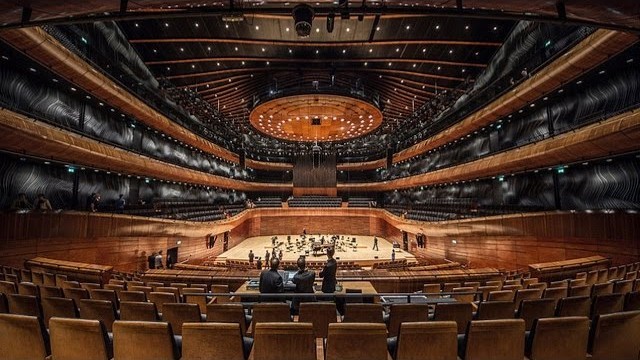
Salto nel Suono festival (Teatro Troisi, Nonantola, Modena, 8 April 2015)